Discover how enterprise companies are transitioning from single-prompt chatbots to autonomous multi-agent systems. Learn how RAG vector search, tool calling, and human-in-the-loop validation deliver 60%+ operational efficiency gains.
The Shift from Passive Chatbots to Autonomous Agentic Workflows
In early generative AI implementations, organizations primarily deployed conversational interfaces (chatbots) that simply answered employee questions. While helpful for basic lookup tasks, these models lacked the ability to take actions, execute transactional database queries, or resolve complex multi-step problems without human micromanagement.
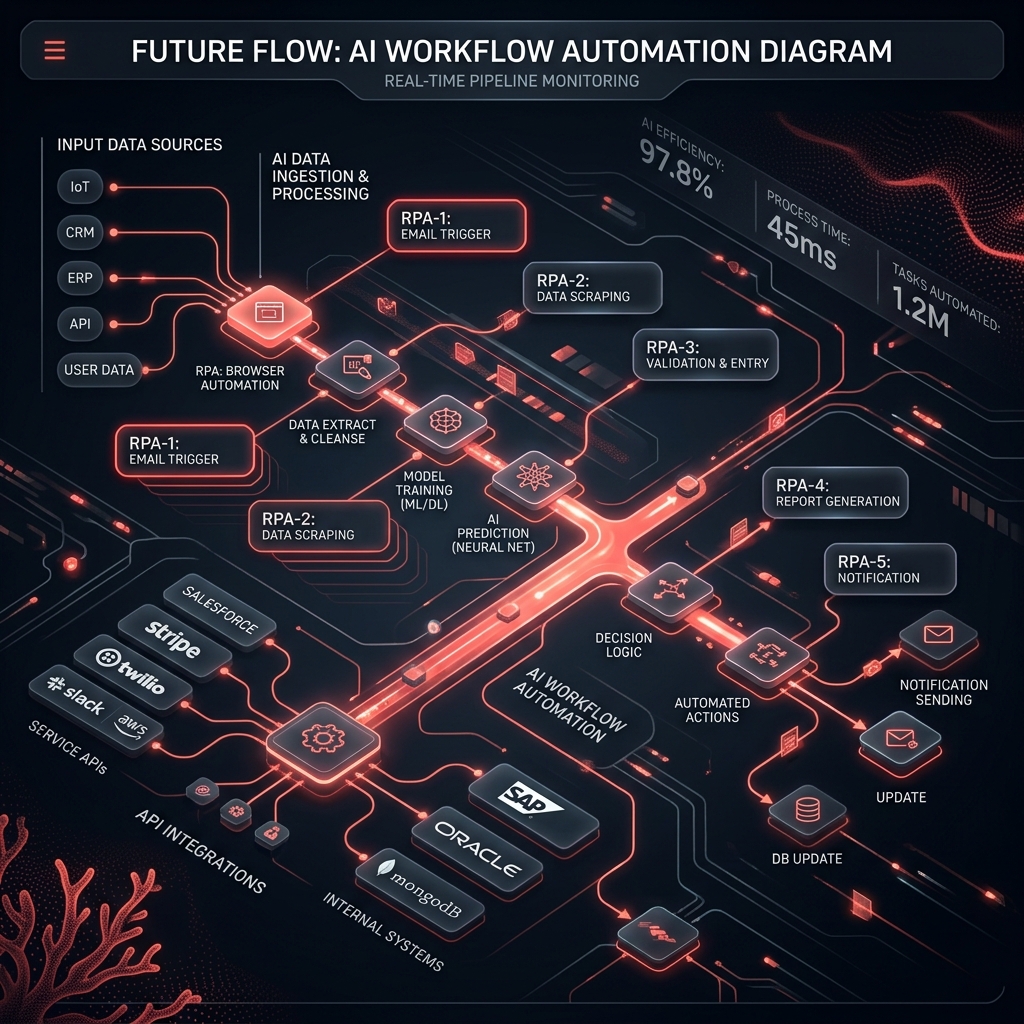
In 2026, the enterprise paradigm has shifted fundamentally to Multi-Agent Autonomous Systems. Rather than relying on a single monolithic LLM, modern architectures employ specialized agents collaborating across specific domain boundaries: an intake agent, an analysis agent, a data validation agent, and an execution trigger agent. Through tailored AI & Process Automation services and modern Custom Software Engineering, organizations can link these multi-agent systems directly into operational databases and enterprise messaging.
Core Architecture: Multi-Agent Orchestration & Deterministic Guardrails
The biggest risk in deploying autonomous AI in regulated industries like Healthcare & HealthTech Systems or Fintech & Banking Systems is hallucination and unpredictable execution. High-performance enterprise systems resolve this through deterministic orchestration frameworks.
By utilizing structured schemas (such as LangGraph state machines or custom event buses), each agent operates within strictly defined parameter boundaries. An agent cannot call an external API or write to an operational ERP without schema validation and automated permission checking as defined in modern Business Automation solutions.
Real-World Business Impact & Measurable ROI
When applied to enterprise document processing (such as automated vendor invoice auditing and OCR reconciliation in Manufacturing & Supply Chain ERP), multi-agent systems reduce manual handling time by over 74%. In client onboarding and KYC compliance, approval cycles shrink from 3 business days to under 4 minutes with 99.8% precision.
VAYCE Innovations designs custom AI pipelines integrated directly with existing PostgreSQL databases, SAP/Tally ERPs, and custom Next.js admin dashboards. See our real-world Enterprise Workflow Automation case study for a breakdown of how we achieved 68% operational cost reduction.